
Unbreakable Defense: The Science Behind Creating Strong and Secure Passwords
In an era where our lives are inextricably linked to the digital realm, the seemingly innocuous string of characters we call a password has evolved from a simple gatekeeper into a critical bastion of our personal and professional security. The constant threat of cyber intrusions necessitates a robust understanding of what makes a password truly secure. This isn’t just about picking a random sequence; it’s about understanding the science, the psychology, and the technological advancements that underpin the creation and maintenance of “unbreakable” defenses.
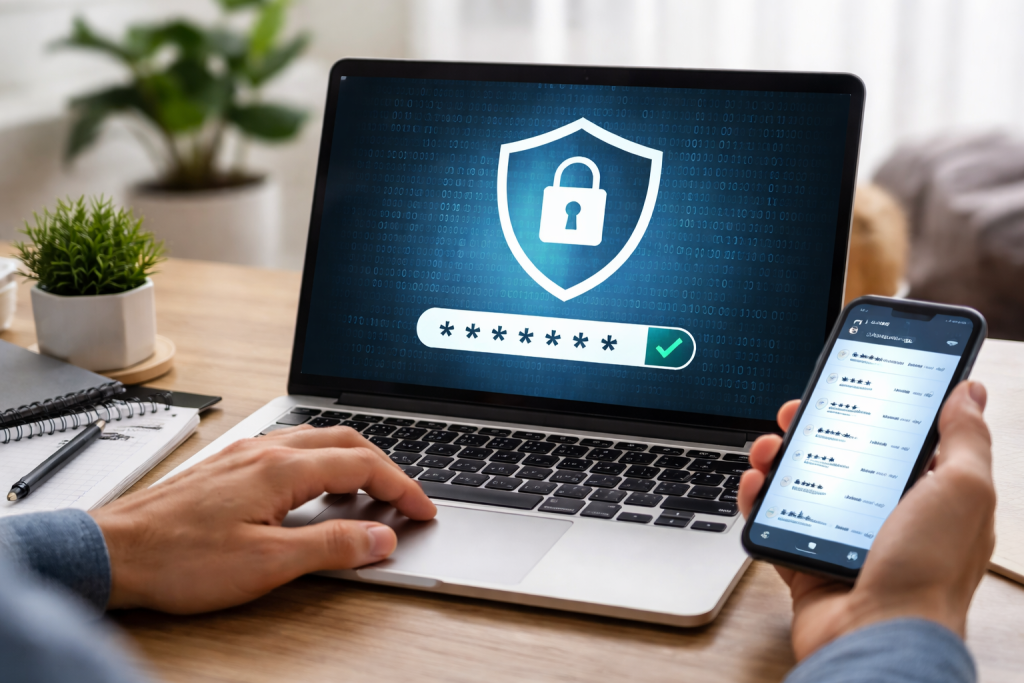
The digital world, while offering unparalleled convenience and connectivity, is also a landscape rife with vulnerabilities. Every online account, every piece of sensitive information, from financial details to personal communications, is potentially exposed to malicious actors. The primary line of defense, the most fundamental barrier against unauthorized access, is the password. Its importance cannot be overstated; it is the digital equivalent of the locks on your doors and the combination to your safe, but with far wider implications.
Contents
- 0.1 The Ever-Present Threat Landscape
- 0.2 The Cost of Weak Passwords
- 0.3 The Logic of Brute Force and Dictionary Attacks
- 0.4 Exploiting Human Error and Social Engineering
- 0.5 The Pillars of a Strong Password
- 0.6 Beyond Simple Randomness: Enhanced Creation Strategies
- 0.7 Securing Passwords in Transit and at Rest
- 0.8 The Power of Hashing for Password Storage
- 0.9 The Siren Song of Simplicity and Predictability
- 0.10 The Peril of Reusing and Sharing Passwords
- 0.11 Streamlining Security and Enhancing Usability
- 0.12 Beyond Storage: Features That Bolster Defense
- 0.13 The Power of “Something You Know, Something You Have, Something You Are”
- 0.14 Reducing Risk and Building Confidence
- 0.15 Beyond Text: The Promise of Biometrics and Behavioral Analysis
- 0.16 The Advent of Passwordless Solutions
- 0.17 The Importance of Awareness and Training
- 0.18 Practical Guidance and Ongoing Support
- 1 FAQs
- 1.1 1. Why are strong passwords important in today’s digital world?
- 1.2 2. What are the best practices for creating a secure and unbreakable password?
- 1.3 3. How does encryption play a role in password security and protecting data?
- 1.4 4. What are common password mistakes to avoid when creating a strong defense?
- 1.5 5. How can employees be educated on strong password practices to build a secure work environment?
- 1.6 About the Author
The Ever-Present Threat Landscape
Cybercriminals are relentless. They employ sophisticated tools and techniques to bypass even seemingly secure systems. Their motivations vary, from financial gain through identity theft and fraud to espionage and even disruptive sabotage. Regardless of the motive, their success often hinges on exploiting weaknesses in user-created passwords. The ease with which personal information can be compromised underscores the urgency of prioritizing strong password practices.
The Cost of Weak Passwords
A weak password is an open invitation to disaster. The consequences can be far-reaching, impacting individuals and organizations alike. For individuals, it can lead to stolen identities, financial ruin, and reputational damage. For businesses, a single compromised password can trigger data breaches, regulatory penalties, loss of customer trust, and significant financial remediation costs. The economic and personal toll of inadequate password security paints a stark picture of its critical importance.
To defend effectively, one must understand the adversary. Hackers operate with a strategic and often opportunistic mindset, constantly seeking the path of least resistance. Their approach to password cracking is a testament to this, blending technical prowess with an understanding of human behavior.
The Logic of Brute Force and Dictionary Attacks
At a fundamental level, many hacking attempts involve systematically trying different combinations of characters until a match is found. This is known as brute-force attack. Variations include dictionary attacks, where pre-compiled lists of common words, phrases, and previously leaked passwords are used. Hackers understand that humans tend to favor predictability and ease of recall, which directly influences their choice of passwords.
Exploiting Human Error and Social Engineering
Beyond purely technical methods, hackers often leverage social engineering – manipulating individuals into revealing sensitive information or performing specific actions. While not directly about password creation, the effectiveness of social engineering often relies on the assumption that users will have weak passwords or will carelessly divulge them. Understanding these psychological triggers helps us appreciate why a strong, unique password serves as a crucial buffer against these more insidious attacks.
Creating a truly secure password is an art and a science. It involves understanding the principles that make a password difficult to crack and consistently applying best practices. There isn’t a single “magic” password, but rather a set of guidelines that create a robust defense.
The Pillars of a Strong Password
The most effective passwords are long, complex, and unique. Length is paramount, as it exponentially increases the number of possible combinations a hacker must try. Complexity, achieved through a combination of uppercase and lowercase letters, numbers, and symbols, further frustrates automated cracking attempts. Uniqueness is equally vital; using the same password across multiple accounts creates a cascading vulnerability where a breach in one instance compromises many.
Beyond Simple Randomness: Enhanced Creation Strategies
While truly random strings are ideal, they are notoriously difficult for humans to remember. Therefore, strategies that balance complexity with memorability are key. This could involve using a passphrase – a series of unrelated words strung together – and then adding complexity through substitutions and capitalization. Another effective method is to use a mnemonic device or a custom algorithm to generate passwords that are easy for you to recall but incredibly difficult for others to guess.
While the creation of strong passwords is the first line of defense, encryption acts as a vital secondary layer, safeguarding your data even if a password is compromised. Encryption transforms readable data into an unreadable format, accessible only with a specific decryption key.
Securing Passwords in Transit and at Rest
When you enter a password on a website, it is often transmitted across the internet. Encryption ensures that this transmission is protected, preventing eavesdroppers from intercepting your credentials. Furthermore, many services encrypt your stored passwords. This means that even if a hacker gains access to the database where your passwords are held, they will only find indecipherable gibberish without the decryption key, which is typically stored separately and securely.
The Power of Hashing for Password Storage
A common and highly effective method for storing passwords is through hashing. Unlike encryption, hashing is a one-way process. A password is put through a hashing algorithm, producing a unique alphanumeric string (a hash). When you log in, your entered password is hashed again, and this new hash is compared to the stored hash. This way, the actual password is never stored, significantly mitigating the damage if the database is breached.
Despite the clear importance of strong passwords, many individuals and organizations fall prey to common and easily avoidable mistakes. Recognizing these pitfalls is the first step towards building a more secure digital presence.
The Siren Song of Simplicity and Predictability
Many of the most frequently used passwords are also the easiest to crack. This includes common words, names of loved ones, birthdates, or sequential numbers. Hackers often target these predictable choices first.
The Peril of Reusing and Sharing Passwords
The convenience of using the same password for multiple accounts is a dangerous illusion. It creates a domino effect; a compromise in one account instantly jeopardizes all others linked by that password. Similarly, sharing passwords, whether intentionally or inadvertently, is a direct invitation to unauthorized access and a severe breach of security protocols.
In the modern digital landscape, remembering a unique, strong password for every online service is an almost impossible task for most people. This is where password managers emerge as indispensable tools in maintaining robust security.
Streamlining Security and Enhancing Usability
Password managers act as secure digital vaults, storing all your complex, unique passwords. They can also generate exceptionally strong, random passwords for you, eliminating the burden of creation and memorization. With a single master password, you can access all your other credentials, significantly simplifying your online security without compromising its strength.
Beyond Storage: Features That Bolster Defense
Many sophisticated password managers offer additional features that enhance security. These can include syncing across devices, secure sharing capabilities (when absolutely necessary), and even alerts for known data breaches that may involve compromised passwords stored within the manager. By delegating the creation and management of complex passwords to these tools, users can significantly elevate their overall digital resilience.
While strong passwords are the bedrock of online security, they are not foolproof. Multi-factor authentication (MFA) introduces an additional layer of defense that significantly hardens your accounts against unauthorized access, even if your password is compromised.
The Power of “Something You Know, Something You Have, Something You Are”
MFA requires users to provide at least two different types of credentials to verify their identity. These typically fall into three categories: something you know (your password), something you have (a physical token, your phone via SMS or an authenticator app), and something you are (biometrics like a fingerprint or facial scan). The combination of these factors makes it exponentially more difficult for an attacker to gain access.
Reducing Risk and Building Confidence
By implementing MFA, you dramatically reduce the risk of unauthorized access. Even if a hacker manages to steal your password, they will still be unable to log in without the second factor. This added layer of security provides peace of mind and builds confidence in your digital interactions, knowing that your accounts are significantly more protected.
The battle for digital security is a continuous one, and the methods of protecting our identities and data are constantly evolving. The future of password security promises innovations that aim to make our online lives both more secure and more convenient.
Beyond Text: The Promise of Biometrics and Behavioral Analysis
While passwords have been the cornerstone of authentication for decades, the future likely holds a greater reliance on biometrics. Fingerprint scanners, facial recognition, and even voice authentication offer highly personal and difficult-to-replicate security measures. Furthermore, behavioral analysis – observing user patterns and habits to detect anomalies – is emerging as a powerful tool for identifying and preventing malicious activity.
The Advent of Passwordless Solutions
The ultimate goal for many in the cybersecurity field is a world where passwords become obsolete. Innovations in passwordless authentication, utilizing secure hardware keys, advanced biometrics, and trusted device verification, are paving the way for a future where logging in is seamless, secure, and entirely free from the burden of memorizing complex strings.
In any organizational setting, the human element is often the weakest link in the security chain. Therefore, comprehensive employee education on strong password practices is not just recommended; it is imperative for building a truly secure work environment.
The Importance of Awareness and Training
Regular training sessions, clear policy guidelines, and ongoing awareness campaigns are crucial for reinforcing good password habits. Employees need to understand why strong passwords matter, the risks associated with weak ones, and the organization’s expectations for password creation and management.
Practical Guidance and Ongoing Support
Beyond theoretical knowledge, providing practical guidance is essential. This includes offering resources on how to create strong passwords, demonstrating the use of password managers, and outlining the protocols for reporting potential security incidents. A culture that prioritizes security, with active support from leadership, fosters a more vigilant and resilient workforce.
In conclusion, while the digital world offers immense benefits, safeguarding our presence within it requires a proactive and informed approach. From understanding the hacker’s psychology to embracing technological advancements like password managers and multi-factor authentication, creating “unbreakable” defenses is an ongoing journey. By prioritizing strong password practices and fostering a culture of digital security, we can navigate the online landscape with greater confidence and resilience.
FAQs
1. Why are strong passwords important in today’s digital world?
Strong passwords are important in today’s digital world because they act as the first line of defense against unauthorized access to personal and sensitive information. With the increasing frequency of cyber attacks, having a strong password is crucial for protecting data and preventing unauthorized access to accounts.
2. What are the best practices for creating a secure and unbreakable password?
The best practices for creating a secure and unbreakable password include using a combination of upper and lower case letters, numbers, and special characters. It is also important to avoid using easily guessable information such as birthdays, names, or common words. Additionally, creating longer passwords and avoiding the reuse of passwords across multiple accounts can enhance security.
3. How does encryption play a role in password security and protecting data?
Encryption plays a crucial role in password security by scrambling data in such a way that it can only be unscrambled with the correct key or password. This ensures that even if a hacker gains access to the encrypted data, they cannot decipher it without the proper authentication. Encryption helps protect sensitive information and ensures that only authorized users can access it.
4. What are common password mistakes to avoid when creating a strong defense?
Common password mistakes to avoid include using easily guessable information such as “password” or “123456”, using the same password across multiple accounts, and sharing passwords with others. It is also important to avoid using personal information such as names, birthdays, or addresses in passwords, as these can be easily guessed or obtained through social engineering tactics.
5. How can employees be educated on strong password practices to build a secure work environment?
Employees can be educated on strong password practices through training sessions, workshops, and informational materials that emphasize the importance of creating strong and unique passwords. Employers can also implement policies that require regular password updates, multi-factor authentication, and the use of password managers to ensure a secure work environment.

About the Author
Maya Ali is the founder of ByteSolving with experience in technology and digital solutions. His mission is to make technology easier to understand and help people solve everyday tech problems in a simple and practical way.