Chrome Not Opening? Try These Proven Solutions
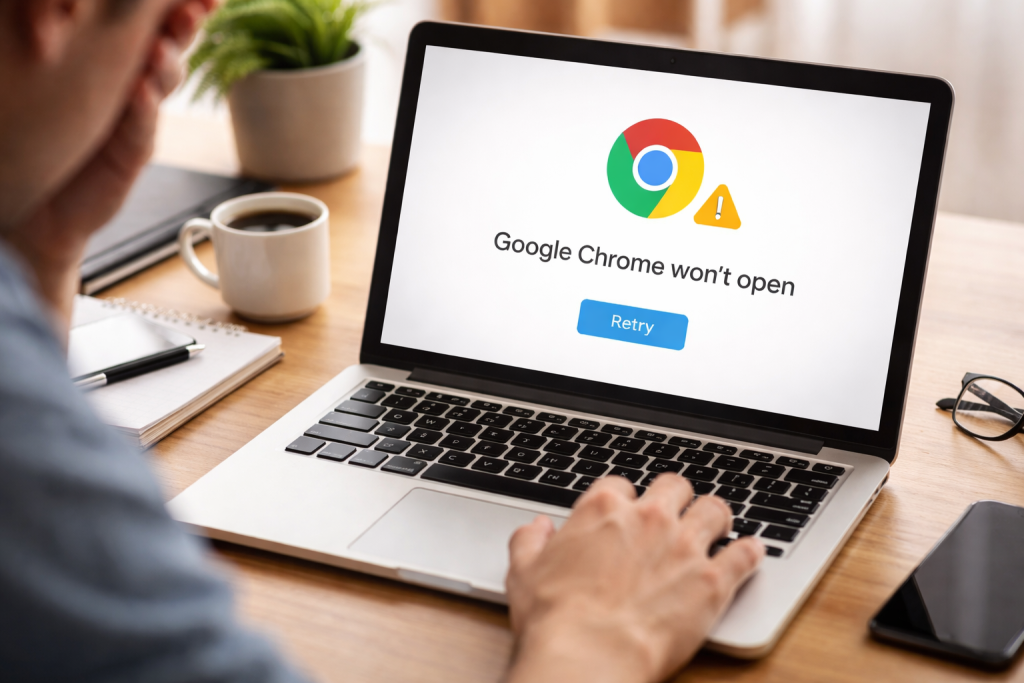
The familiar Google Chrome icon sits on your desktop, beckoning with promises of internet exploration, but when you click it, nothing happens. The cursor might briefly spin, a shadow of a window might flash, but then… silence. This frustrating scenario is more common than you think, and thankfully, it’s rarely a sign of impending doom. There are numerous well-established and highly effective strategies to revive your dormant browser.
One of the most frequent culprits behind a misbehaving browser, especially one that refuses to launch, is a corrupt or overflowing cache and cookie store. Think of your cache as a temporary storage area for website data—images, scripts, and stylesheets—designed to speed up subsequent visits. Cookies, on the other hand, are small data files that websites store on your computer to remember information about you, like login details or preferences. Over time, these can become corrupted or accumulate to a point where they actively hinder Chrome’s ability to start.
Contents
- 0.1 Clearing Chrome’s Cache and Cookies
- 0.2 Disabling Chrome Extensions
- 0.3 Updating Chrome to the Latest Version
- 0.4 Running Chrome in Compatibility Mode
- 0.5 Checking for Malware or Viruses
- 0.6 Resetting Chrome Settings to Default
- 0.7 Reinstalling Chrome
- 0.8 Checking for System Updates
- 0.9 Using Chrome’s Task Manager to Identify Issues
- 0.10 Seeking Help from Chrome Support Community
- 1 FAQs
Clearing Chrome’s Cache and Cookies
To perform this essential maintenance, assuming you can eventually get Chrome to open, even briefly:
- Accessing Settings: Open Chrome, click the three-dot menu in the top-right corner, and select “Settings.”
- Navigating to Privacy and Security: In the left-hand sidebar, click on “Privacy and security.”
- Finding Clear Browsing Data: Click on “Clear browsing data.”
- Selecting Time Range and Data Types: In the pop-up window, choose a time range (ideally “All time” for a thorough clean) and ensure “Cookies and other site data” and “Cached images and files” are checked. You may also want to uncheck “Browsing history” if you wish to retain it, but for troubleshooting purposes, a complete clear is often best.
- Initiating the Clear: Click “Clear data.”
If Chrome isn’t opening at all, you might need to use a slightly different approach. You can try accessing the settings through your operating system’s application management or by directly manipulating Chrome’s data folders. For Windows users, navigate to and then delete the Cache folders. Be cautious when directly deleting files, and ensure Chrome is completely closed first.
Chrome extensions, while incredibly useful for customizing your browsing experience and adding powerful features, are often a significant source of conflict. Each extension is a mini-program running within your browser, and a poorly coded, outdated, or corrupted extension can easily prevent Chrome from launching correctly.
Disabling Chrome Extensions
The most straightforward way to diagnose if an extension is the problem is to try launching Chrome in Incognito Mode. By default, most extensions are disabled in Incognito. If Chrome opens flawlessly in Incognito but not in regular mode, an extension is almost certainly the culprit.
To manage extensions once Chrome is open:
- Accessing Extensions: Click the three-dot menu, go to “More tools,” and then select “Extensions.”
- Disabling Individually: On the Extensions page, you’ll see a list of all your installed extensions. For each extension, toggle the blue switch to the left to disable it.
- Identifying the Culprit: A good strategy is to disable all extensions, then re-enable them one by one, attempting to open Chrome after each re-enablement to pinpoint the problematic extension.
- Removing Problematic Extensions: Once identified, consider whether you truly need the problematic extension. If not, click the “Remove” button to uninstall it.
If Chrome won’t open at all, even in Incognito, you might have to resort to a more drastic measure. You can manually disable extensions by navigating to your Chrome profile folder (as mentioned in the cache clearing section) and renaming the Extensions folder. This will cause Chrome to open as if no extensions were installed.
Software updates are not just about new features; they often include critical bug fixes, security patches, and performance improvements that can resolve underlying issues causing your browser to crash or fail to open. Running an outdated version of Chrome can leave you vulnerable to known bugs that have already been addressed in newer releases.
Updating Chrome to the Latest Version
When Chrome does open, even if sporadically:
- Checking for Updates: Click the three-dot menu, go to “Help,” and then select “About Google Chrome.”
- Automatic Update Check: Chrome will automatically check for updates and download them if available.
- Relaunching Chrome: You’ll be prompted to relaunch Chrome after the update is complete.
If Chrome refuses to open, you’ll need to manually download the latest version from the official Google Chrome website and install it. This will essentially reinstall the browser, overwriting the old version with the new one while preserving your settings and bookmarks (though a backup is always recommended).
Sometimes, the issue isn’t directly with Chrome but with how it interacts with your operating system. Compatibility settings and deeper system issues can play a role.
Running Chrome in Compatibility Mode
For Windows users, compatibility mode can sometimes resolve issues with older software or software that’s having trouble interacting with a newer operating system.
- Locating Chrome’s Executable: Right-click on the Google Chrome shortcut (on your desktop or in the Start Menu) and select “Properties.”
- Accessing Compatibility Tab: In the Properties window, go to the “Compatibility” tab.
- Enabling Compatibility Mode: Check the box that says “Run this program in compatibility mode for:” and then select an earlier version of Windows from the dropdown menu (e.g., Windows 8 or Windows 7).
- Applying Changes: Click “Apply” and then “OK.” Try launching Chrome again.
Checking for Malware or Viruses
Malware or viruses can deeply embed themselves in your system, interfering with legitimate applications, including your web browser. They might block Chrome from launching, redirect your traffic, or even use your browser to send spam.
- Running a Full System Scan: Use a reputable antivirus or anti-malware program (like Windows Defender, Malwarebytes, or Avast) to perform a comprehensive scan of your entire system.
- Addressing Threats: Follow the software’s instructions to quarantine or remove any detected threats.
- Rebooting Your System: After removing malware, always reboot your computer to ensure all changes take effect.
When all else fails, a fresh start is often the most effective solution. This involves either resetting Chrome to its factory settings or, in more severe cases, completely uninstalling and reinstalling the browser.
Resetting Chrome Settings to Default
This option is less drastic than a full reinstallation and can resolve issues caused by corrupted settings or unwanted changes. It will reset your startup page, new tab page, search engine, and pinned tabs and disable extensions, but it won’t clear your bookmarks, history, or saved passwords.
- Accessing Reset Settings: Open Chrome, click the three-dot menu, go to “Settings,” and then scroll down to the “Reset settings” section (you might need to click “Advanced” first).
- Initiating the Reset: Click “Restore settings to their original defaults.”
- Confirming the Action: A confirmation dialog will appear. Click “Reset settings.”
Reinstalling Chrome
If resetting doesn’t work, a complete reinstallation is the next logical step. This ensures that any corrupted program files or deep-seated configuration issues are completely removed.
- Uninstalling Chrome:
- Windows: Go to “Control Panel” > “Programs” > “Programs and Features,” find “Google Chrome,” and click “Uninstall.”
- macOS: Drag the Google Chrome application from your “Applications” folder to the Trash.
- Deleting Residual Files (Optional but Recommended): After uninstalling, it’s a good practice to manually delete any remaining Chrome data folders to ensure a completely clean slate. For Windows, look in
C:\Users\YourUsername\AppData\Local\Google\Chrome. For macOS, look in~/Library/Application Support/Google/Chrome. - Downloading and Installing: Download the latest version of Chrome from the official Google Chrome website and follow the installation instructions.
Checking for System Updates
Just as Chrome updates are crucial, so are updates for your operating system. System updates often include critical drivers, security patches, and compatibility improvements that can resolve conflicts affecting applications like Chrome.
- Windows: Go to “Settings” > “Update & Security” > “Windows Update” and click “Check for updates.”
- macOS: Go to “System Preferences” > “Software Update.”
Using Chrome’s Task Manager to Identify Issues
If Chrome does manage to open but then becomes unresponsive or crashes, its built-in Task Manager can be an invaluable diagnostic tool. It shows you which tabs, extensions, and processes are consuming the most resources.
- Accessing Task Manager: When Chrome is open, press
Shift + Esc(Windows) or go to the three-dot menu > “More tools” > “Task manager.” - Identifying Resource Hogs: Look for tasks that are using an unusually high amount of CPU or memory.
- Ending Processes: Select a suspicious or resource-intensive process and click “End process.” If this resolves the issue, you’ve found your culprit.
Seeking Help from Chrome Support Community
If you’ve exhausted all these troubleshooting steps and Chrome still refuses to cooperate, it’s time to leverage the collective wisdom of the Chrome user community. Google maintains active support forums where users and experts share solutions and offer guidance.
- Searching Existing Discussions: Before posting, search the community forums for similar issues. It’s highly likely someone else has faced the same problem and found a solution.
- Posting a Detailed Question: If you can’t find a relevant answer, create a new post. Provide as much detail as possible about your problem, including:
- Your operating system and its version.
- The version of Chrome you’re trying to use.
- A precise description of the issue (e.g., “Chrome won’t open at all, no error messages,” or “Chrome opens then immediately crashes”).
- A list of all troubleshooting steps you’ve already tried.
- Any recent changes to your system (e.g., new software installations, hardware upgrades).
- Following Advice: Be prepared to try additional diagnostic steps suggested by community members.
Reviving a non-starting Chrome can be a process of elimination, but with these proven solutions, you’re well-equipped to get back to browsing in no time. Remember to be methodical, try one solution at a time, and test Chrome after each step to identify what works.
FAQs
1. Why is Chrome not opening on my computer?
Chrome may not be opening due to various reasons, such as corrupted cache and cookies, problematic extensions, an outdated version of Chrome, compatibility issues, malware or viruses, or system updates.
To clear Chrome’s cache and cookies, you can go to the Chrome menu, select “More tools,” and then click on “Clear browsing data.” From there, you can choose the time range and the types of data you want to clear.
3. What should I do to disable Chrome extensions?
To disable Chrome extensions, you can go to the Chrome menu, select “More tools,” and then click on “Extensions.” From there, you can toggle off the extensions that you want to disable.
4. How do I update Chrome to the latest version?
To update Chrome to the latest version, you can go to the Chrome menu, select “Help,” and then click on “About Google Chrome.” Chrome will automatically check for updates and prompt you to install the latest version if available.
5. How can I seek help from the Chrome Support Community?
You can seek help from the Chrome Support Community by visiting the Chrome Help Forum on the Google Support website. There, you can ask questions, browse through existing threads, and get assistance from other Chrome users and experts.

About the Author
Maya Ali is the founder of ByteSolving with experience in technology and digital solutions. His mission is to make technology easier to understand and help people solve everyday tech problems in a simple and practical way.